Meadow & rewilding · Wendover
Chalk Downs Meadow.
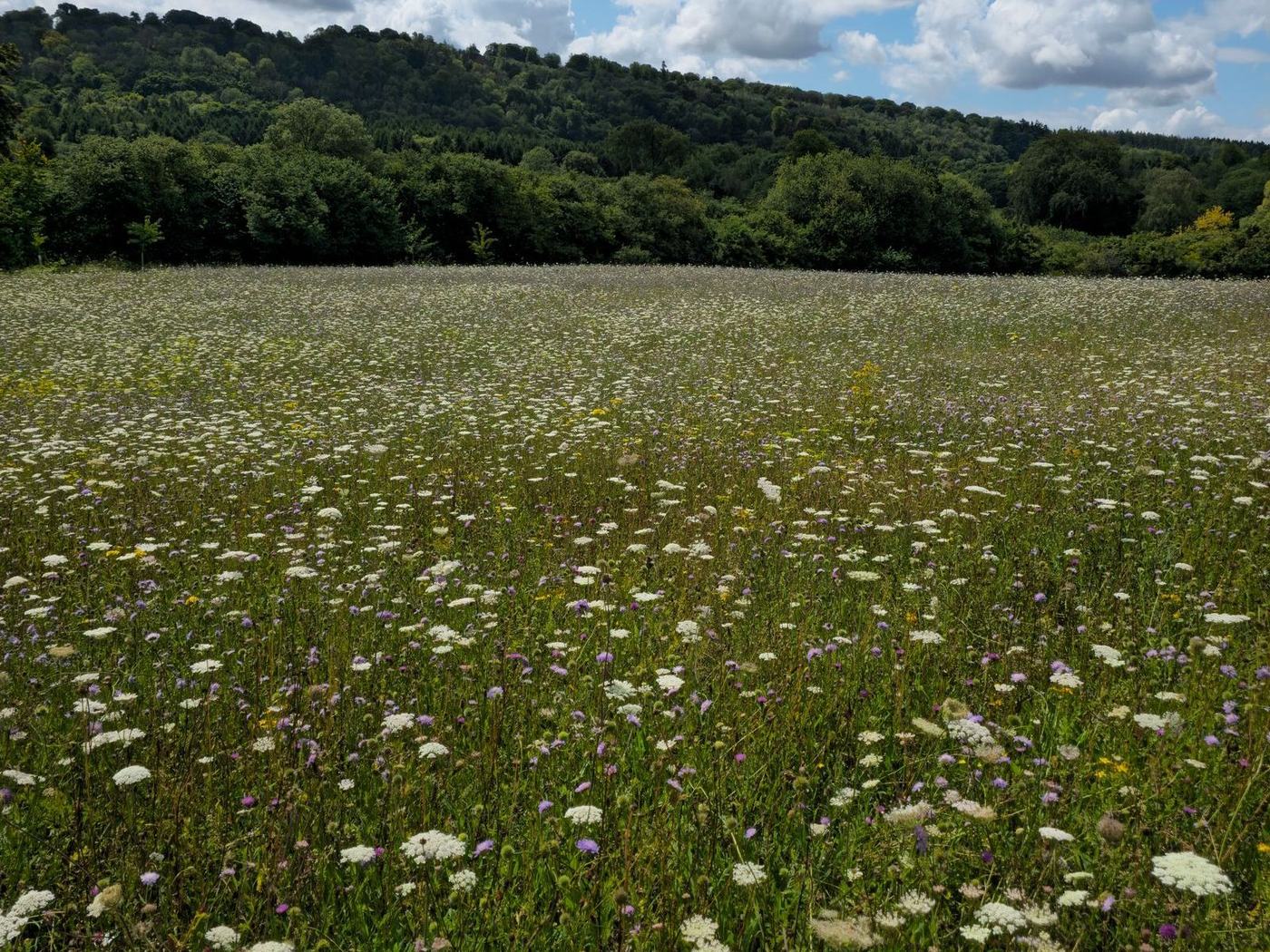
Four acres of ride-on-mower lawn, cut weekly for thirty years, sitting on some of the most wildflower-hungry geology in England. Our client asked one question: “What would happen if we just… stopped?” The answer took three years and is still getting better.
Location
Wendover, Buckinghamshire
Plot
4 acres, thin loam over chalk
Scope
Meadow design, establishment & management
Completed
Sown 2023 · ongoing care
The brief
Our clients were spending eleven hours a week mowing grass nobody walked on, and wanted their land to do something for the valley's wildlife instead. But they were clear-eyed about the risk: an abandoned lawn doesn't become a meadow, it becomes a thistle field. They wanted wildness with a management plan.
What we did
Chalk downland wants poverty, and decades of mowing-and-collecting had helpfully starved the soil already. We scalped and harrowed in late summer, then oversowed with a locally harvested chalk grassland mix, heavy on yellow rattle, the semi-parasitic annual that suppresses grass and opens the sward for everything else.
Design-wise, the trick is the frame. A generous mown path makes two long loops through the meadow, with a wider mown circle around a single field maple where a bench catches the evening light. The edges along the drive stay close-cut. Wild in the middle, deliberate at the margins: that's what keeps a meadow reading as a garden.
By the second June there were bee orchids in the north corner. Nobody planted them. That's the point.
The results so far
- Year one: yellow rattle established across 80% of the sward; ox-eye daisy, knapweed and wild carrot dominant.
- Year two: first bee orchids and common spotted orchids; small blue and marbled white butterflies recorded.
- Year three: 94 plant species counted in a July survey, up from 12 in the original lawn. Mowing time: four hours a year, plus the August hay cut.
- Rhinanthus minor
- Leucanthemum vulgare
- Centaurea scabiosa
- Ophrys apifera
- Primula veris
- Lotus corniculatus
- Briza media
- Origanum vulgare
We used to look at the lawn. Now we walk out into the meadow every single evening, in every season, and there is always something new. It has changed how we live here.